At a glance
- Built: c. 1150–1200 (later expansions)
- Location: Lom, Innlandet, Norway
- Type: Large stave church with later transepts
- Materials: Pine staves, tarred shingles
One of Norway’s largest stave churches (c. 1150–1200) with medieval carvings and a dramatic mountain setting
Lom Stave Church, built between 1150 and 1200, is one of the largest surviving stave churches in Norway. Unlike many smaller stave churches, Lom was expanded in the 17th century with transepts and a tall spire, giving it the cruciform floor plan that visitors see today. The combination of original 12th-century timberwork and later additions makes Lom a unique showcase of evolving Norwegian church architecture.
Archaeological evidence indicates that a Christian church stood here even earlier, likely on top of a pre-Christian sacred site. This continuity makes Lom an important link between Viking Age traditions and medieval Christianity in Norway. Excavations have uncovered coins and artifacts from the Middle Ages, underlining the church’s long history as a cultural and religious hub in the Gudbrandsdal valley.
The carved portals and capitals feature interlaced vines, dragons, and animal figures. These motifs are closely related to the Viking artistic style, showing how Norse craftsmanship blended into Christian symbolism during the High Middle Ages. Inside, visitors find painted decorations, medieval furnishings, and runic inscriptions scratched into the timber walls—rare insights into the lives of past parishioners.
Lom’s scale also reflects its importance. Located on medieval pilgrimage routes to Nidaros Cathedral in Trondheim, the church served travelers as well as the local community. Its striking silhouette, with steep tarred shingle roofs and a towering spire, remains a landmark for anyone traveling through the Gudbrandsdal region.
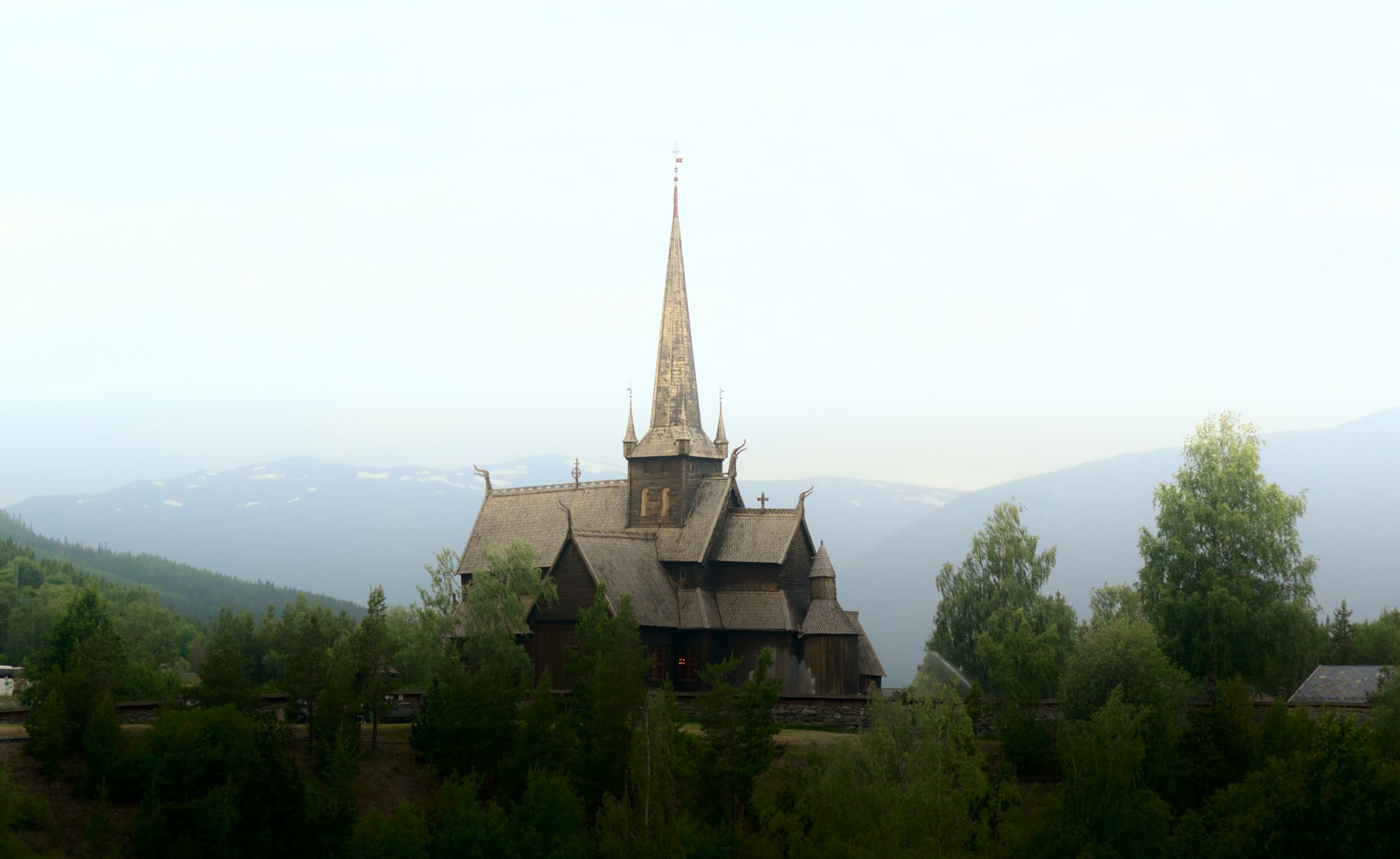
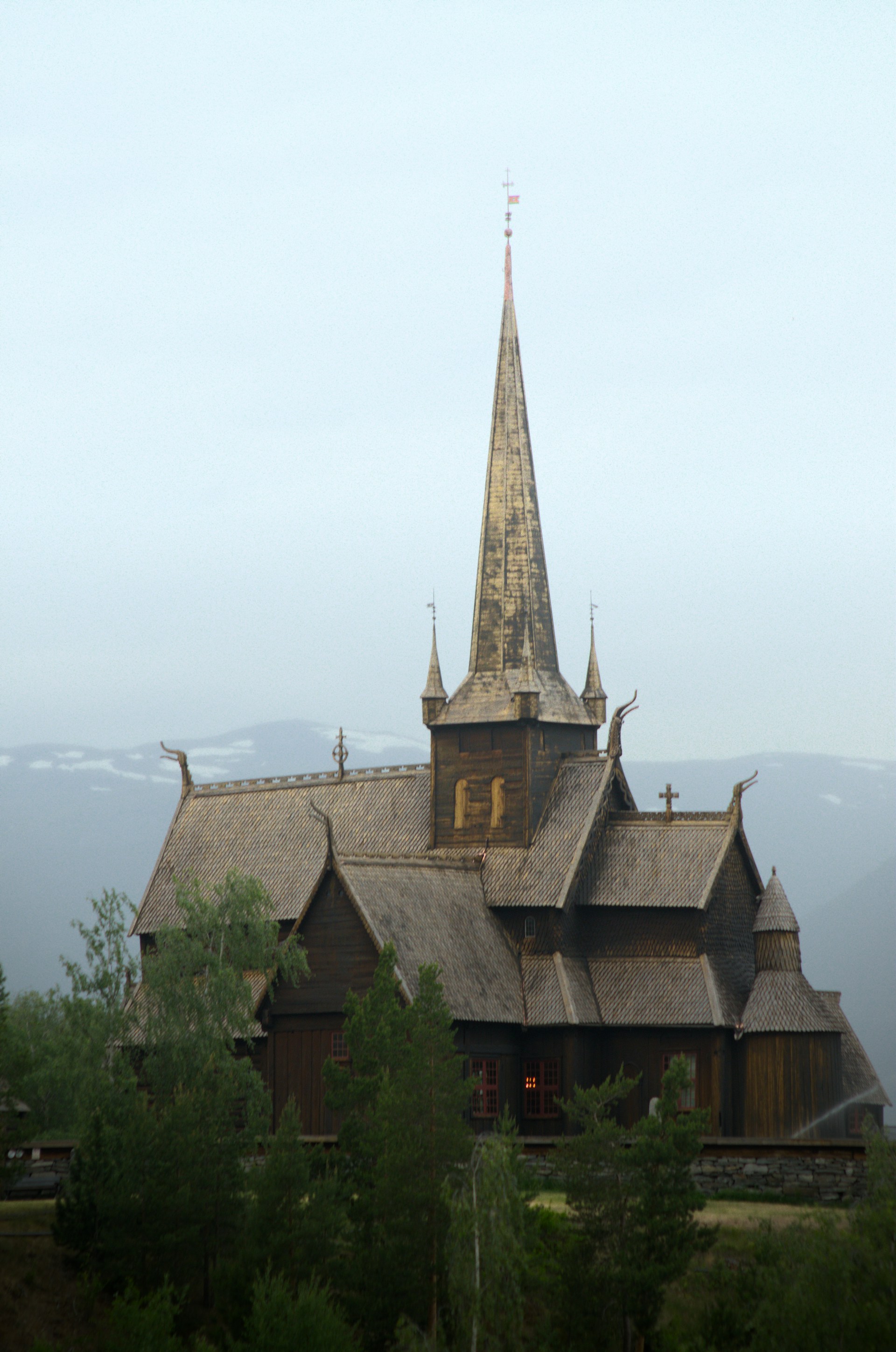
Lom lies in Innlandet county along key routes to the Jotunheimen mountains. Parking and visitor services are available in the village, a short walk from the church.
Reaching Lom Stave Church is straightforward. By car, it lies on National Road 15 connecting eastern Norway with the western fjords. Public transport options include seasonal buses from Otta or Stryn. Once in the village, the church is centrally located with visitor parking and amenities a short walk away.
Lom Stave Church is open from spring to autumn, with guided tours available in the peak summer season. Plan at least 45–90 minutes to explore the interior, study the medieval carvings, and walk the surrounding churchyard. Guided visits add context on construction methods, symbolism, and the church’s role in Norwegian history.
Photography is especially rewarding in soft morning or late-afternoon light when the tarred shingles and carved details stand out. Many visitors combine Lom with hikes in Jotunheimen National Park or with other stave churches such as Ringebu, Urnes (UNESCO), and Borgund for a deeper wooden-church trail.
Pair your visit to Lom with other heritage in Gudbrandsdalen, or continue your church trail to Ringebu Stave Church and sites further south.
Yes. Visitors are welcome inside during the open season (spring to autumn). Guided tours explain the building’s architecture, runic inscriptions, and medieval carvings, making the visit more meaningful than viewing from outside.
Yes. Unlike many stave churches preserved only as museums, Lom functions as an active parish church. Services and weddings are held at certain times of year, so visitor access may vary during religious use. This continuity makes Lom both a heritage site and a living place of worship.
Allow 45–90 minutes to tour Lom Stave Church, view the carved portals and interior decorations, and explore the churchyard. If you’re pairing your visit with the local museum or a drive into Jotunheimen, set aside half a day.