At a glance
- Built: c. 1130 CE
- Location: Vik, Vestland (Sogn)
- Type: Triple-nave stave church
- Materials: Pine staves, tarred shingles
One of Norway’s oldest stave churches (c. 1130) with carved Viking-style details
Hopperstad Stave Church was built around 1130 CE and is one of the oldest stave churches in Norway. Restored in the 1880s by architect Peter Blix, it preserves medieval features and imaginative Viking-style ornamentation.
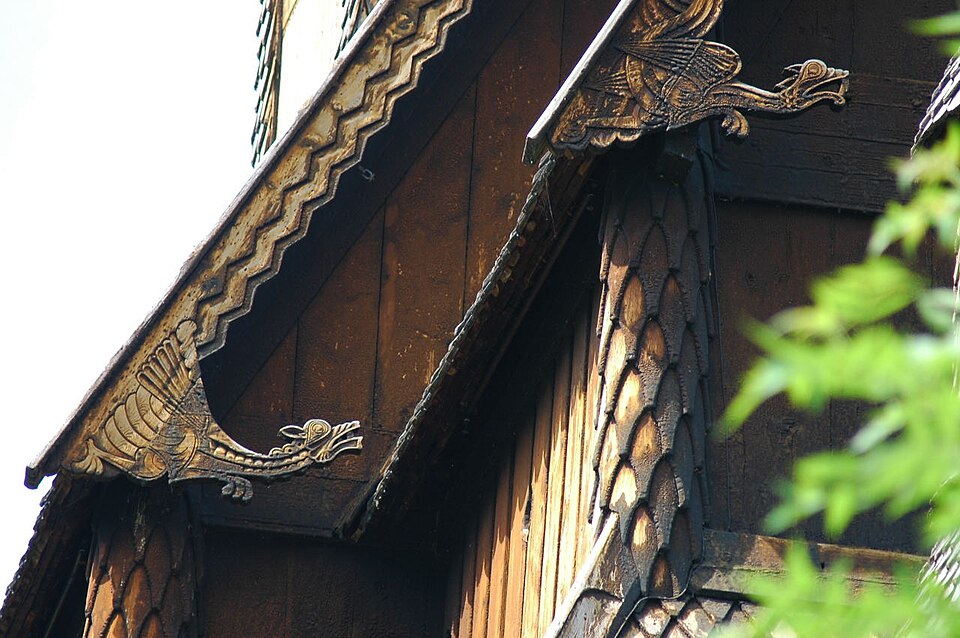
The carved portals show animals and intertwined vines that recall Norse artistic traditions. Its steep, shingled roof and location on a hillside above Vik make it a striking landmark in Sogn.
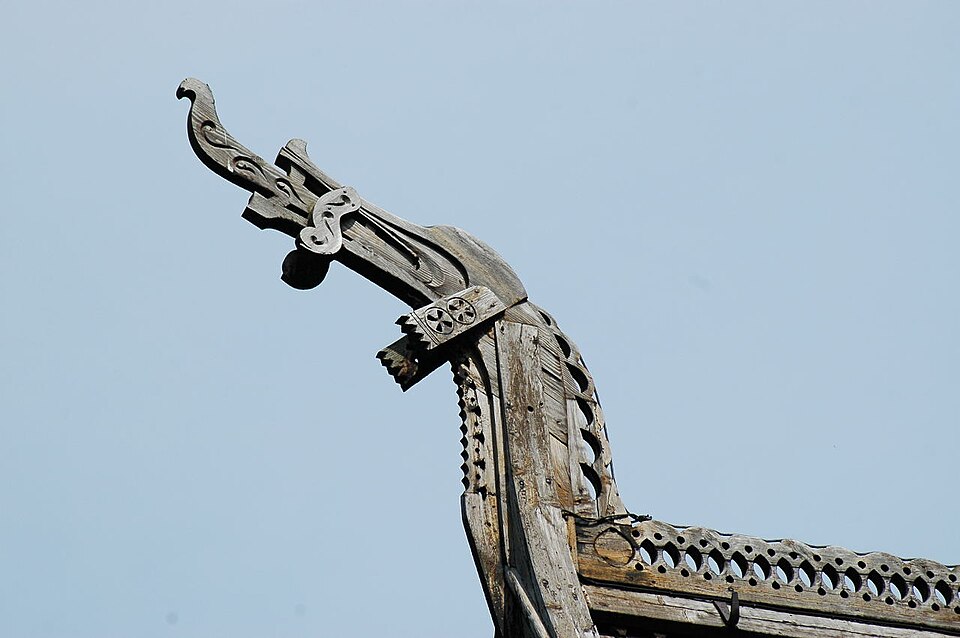
Built during Norway’s transition from Norse pagan traditions to medieval Christianity, Hopperstad shows how older decorative languages persisted in a Christian context. The dragonheads and animal interlace recall Viking ships and woodwork, while the building’s plan, fittings, and liturgical use reflect the medieval Church.
As a parish focus for Vik for centuries, the church anchored local community life—worship, rites of passage, and gatherings. Today it serves as a preserved heritage site and a gateway to understanding Norway’s medieval wooden architecture in the Sogn region.
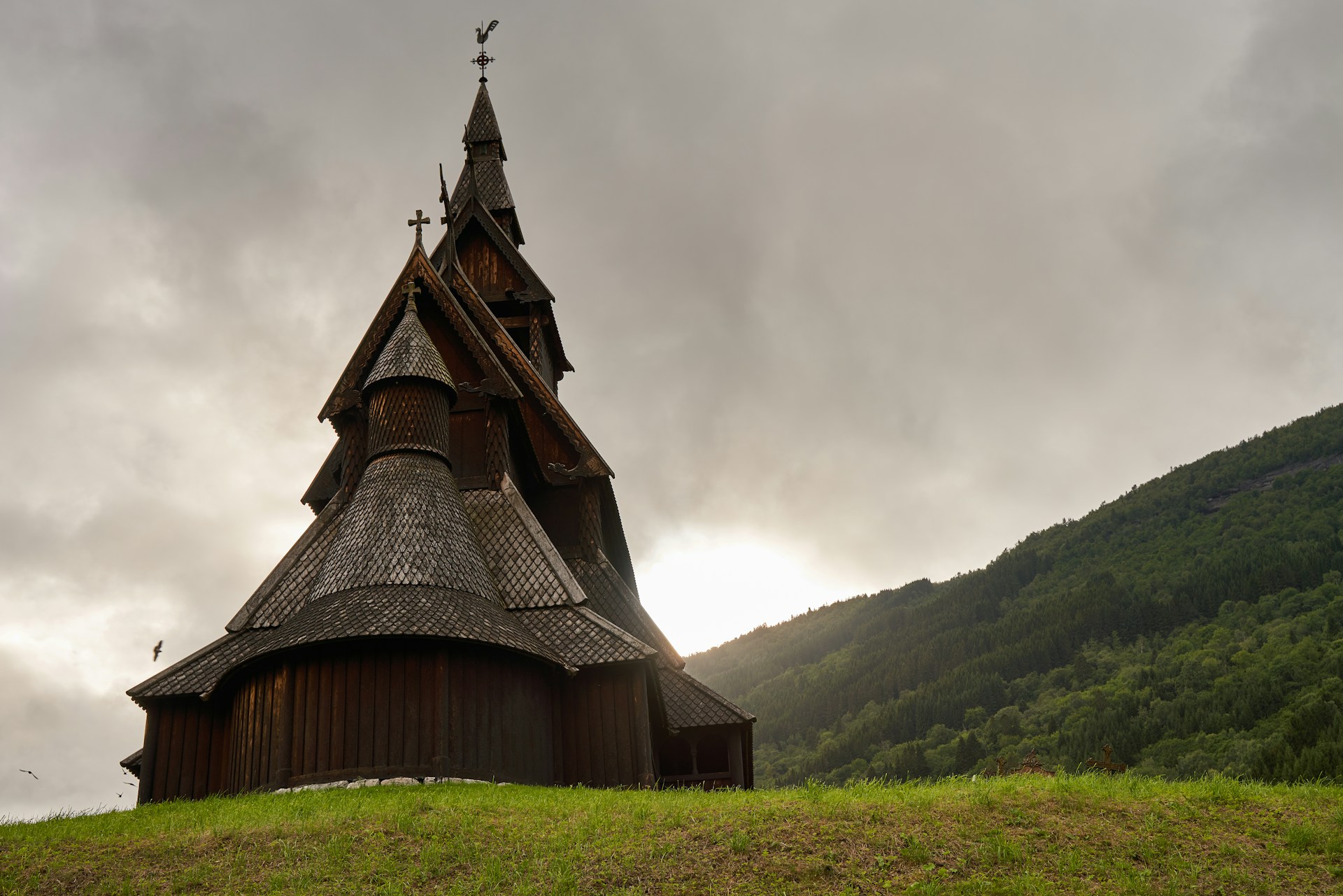
Hopperstad Stave Church stands above Vik in Vestland county. Drivers typically reach Vik either via the scenic mountain roads from Voss or Sogndal, or by taking regional ferries across branches of the Sognefjord.
Public transport options vary by season; in summer there are more bus and ferry connections. Allow time for the final uphill walk or short drive from the village to the church site. Parking and visitor information are available in Vik.
Guided hosts share the church’s history, restoration, and carving symbolism. Interior access is typically seasonal; hours can vary with events. Combine your visit with a stroll through Vik and viewpoints over the Sognefjord.
Many travelers link Hopperstad with other wooden-church highlights in Sogn. For deeper context, visit Urnes Stave Church (UNESCO) across the fjord or plan a route that includes Kaupanger Stave Church.
It was built around 1130 CE, making it one of Norway’s oldest stave churches.
Its age, richly carved portals, Viking-style ornament, and dramatic fjordside location make it unique.
Yes, during the summer season. Tours and heritage info are available in Vik.